.png)
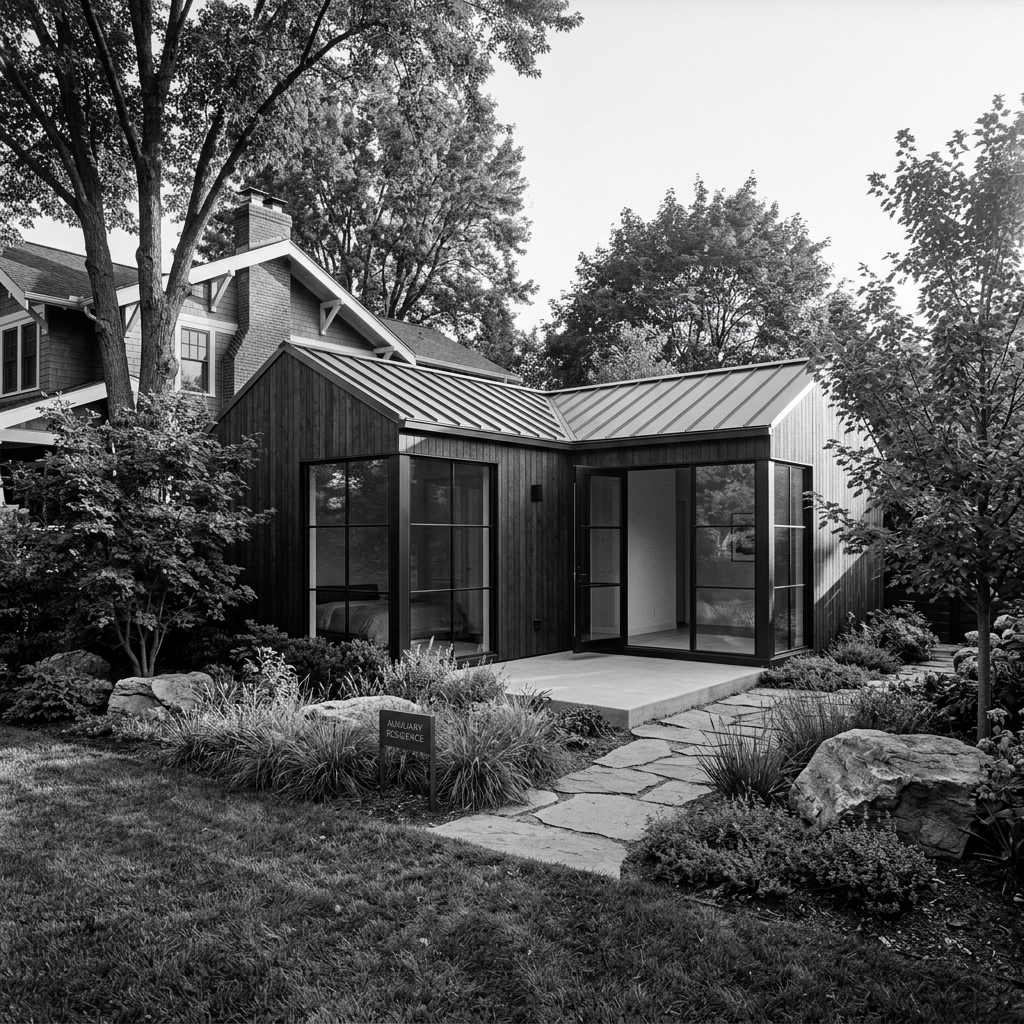
In Portland, Accessory Dwelling Units (ADUs) are a critical fixture of the local housing market. Over the past decade, zoning shifts and a push for urban density have made Portland one of the most ADU-friendly cities in the nation. For homeowners looking to refinance, sell, or divide assets, understanding exactly how an appraiser values an ADU is crucial.
The Evolution of Portland's ADU Landscape
Portland has experienced a rapid acceleration in ADU construction, driven largely by municipal incentives, waived System Development Charges (SDCs) in earlier years, and the easing of owner-occupancy requirements. From basement conversions in Southeast Portland to sleek, detached backyard cottages in Northeast, these units provide vital secondary income streams and multi-generational housing solutions.
However, from an appraisal perspective, this explosion in popularity does not mean every ADU contributes equally to a property's market value. The valuation of an ADU is a highly specialized process governed by strict industry guidelines.
The Strict Rules of Gross Living Area (GLA)
When an appraiser observes a property with an ADU, the very first question is one of measurement and classification. Under the strict guidelines of the Uniform Standards of Professional Appraisal Practice (USPAP) and FNMA/FHLMC (Fannie Mae and Freddie Mac) requirements, an ADU is almost never combined with the primary residence's Gross Living Area (GLA).
If your main home is 2,000 square feet and your detached ADU is 600 square feet, your home is not appraised as a 2,600-square-foot property. They are measured, documented, and valued as two entirely separate entities: the primary dwelling and the accessory unit. Combining them is a fatal flaw in an appraisal report and immediately invalidates the valuation for any legal or lending purpose.
Permitted vs. Unpermitted ADUs
The permitting status of an ADU radically alters its valuation. A fully permitted ADU built to municipal code is valued as a legal, conforming (or legally non-conforming) use. It enjoys full market recognition.
Conversely, a homeowner may transform a detached garage into a living space without securing the proper permits from the City of Portland. While the space may look identical to a permitted ADU, the appraiser must deal with the reality of unpermitted work. Appraisers do not act as code enforcers, but they must analyze how the open market reacts to unpermitted spaces. Often, buyers will heavily discount an unpermitted ADU due to the inherent liability of future municipal fines or the cost of retrofitting the unit to code. Therefore, an unpermitted ADU will rarely command the same market value premium as a fully permitted counterpart.
The Search for True Comparables (The Sales Comparison Approach)
The greatest challenge in appraising an ADU in Portland is finding an accurate comparable sale. To establish a legally defensible value, an appraiser must locate recent sales of homes that also feature a highly similar ADU.
If a property in the Mount Tabor neighborhood has a permitted, attached ADU, comparing it to standard single-family homes without secondary living quarters will fundamentally skew the analysis. The appraiser must comb through Portland's specific MLS data, verifying permits and zoning compliance to isolate the true market premium commanded by an ADU.
Furthermore, the appraiser must consider the specific utility of the unit. A detached ADU with its own private alley access in the Richmond neighborhood appeals differently to the market than an ADU carved out of a daylight basement with shared access.
The Income Approach: Valuing Cash Flow
Depending on the specific assignment and the property's Highest and Best Use, an appraiser may perform an Income Approach. This involves analyzing localized rental market data to determine what income the ADU could realistically generate on the open market.
By extracting a Gross Rent Multiplier (GRM) from similar income-producing properties, the appraiser can translate that potential cash flow into a solid indicator of value. This provides a data-driven layer of support beyond just comparing recent sales, establishing a clear financial baseline for the property's worth.
Cost Does Not Equal Value
Homeowners often make a critical assumption regarding ADUs: If I spend $150,000 building a detached driveway ADU, my home’s value will immediately increase by $150,000.
In the appraisal world, cost to build rarely equals market value. The market determines the value of the ADU, not the contractor's invoice. While a high-end ADU adds substantial value, it is not uncommon for a $150,000 expenditure to only yield an $80,000 to $100,000 increase in the property's overall market value. This phenomenon, known as depreciation or market resistance, is a vital component of the appraiser's analysis.
At Bernhardt Appraisal, we understand the incredible complexities of Portland's secondary housing market. We provide comprehensive, defensible valuations that accurately reflect the unique utility and market appeal of accessory living quarters.